In today’s built environments, whether commercial offices, hospitality spaces, healthcare facilities, or high-end residential projects, power access is no longer a purely functional consideration. Architects, engineers, and interior designers are expected to integrate power and data solutions that support modern technology demands without disrupting the visual integrity of the space.
The challenge? Balancing accessibility, code compliance, flexibility, and aesthetics.
Modular power docks and daisy chain systems offer a compelling solution. Designed to adapt to evolving layouts and user needs, they allow design teams to deliver seamless power access while preserving clean lines, material intent, and architectural clarity. Below are five smart ways to incorporate power access thoughtfully, without compromising design.
-
Integrate Power Directly Into Furniture and Millwork
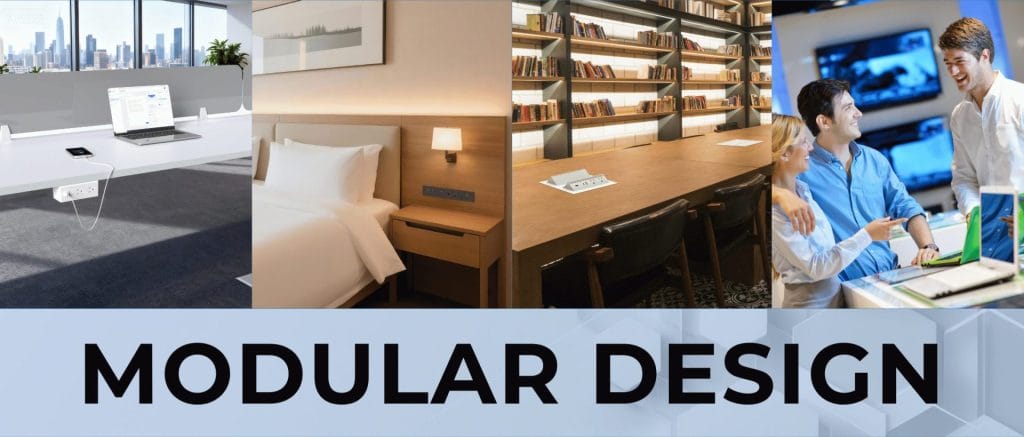
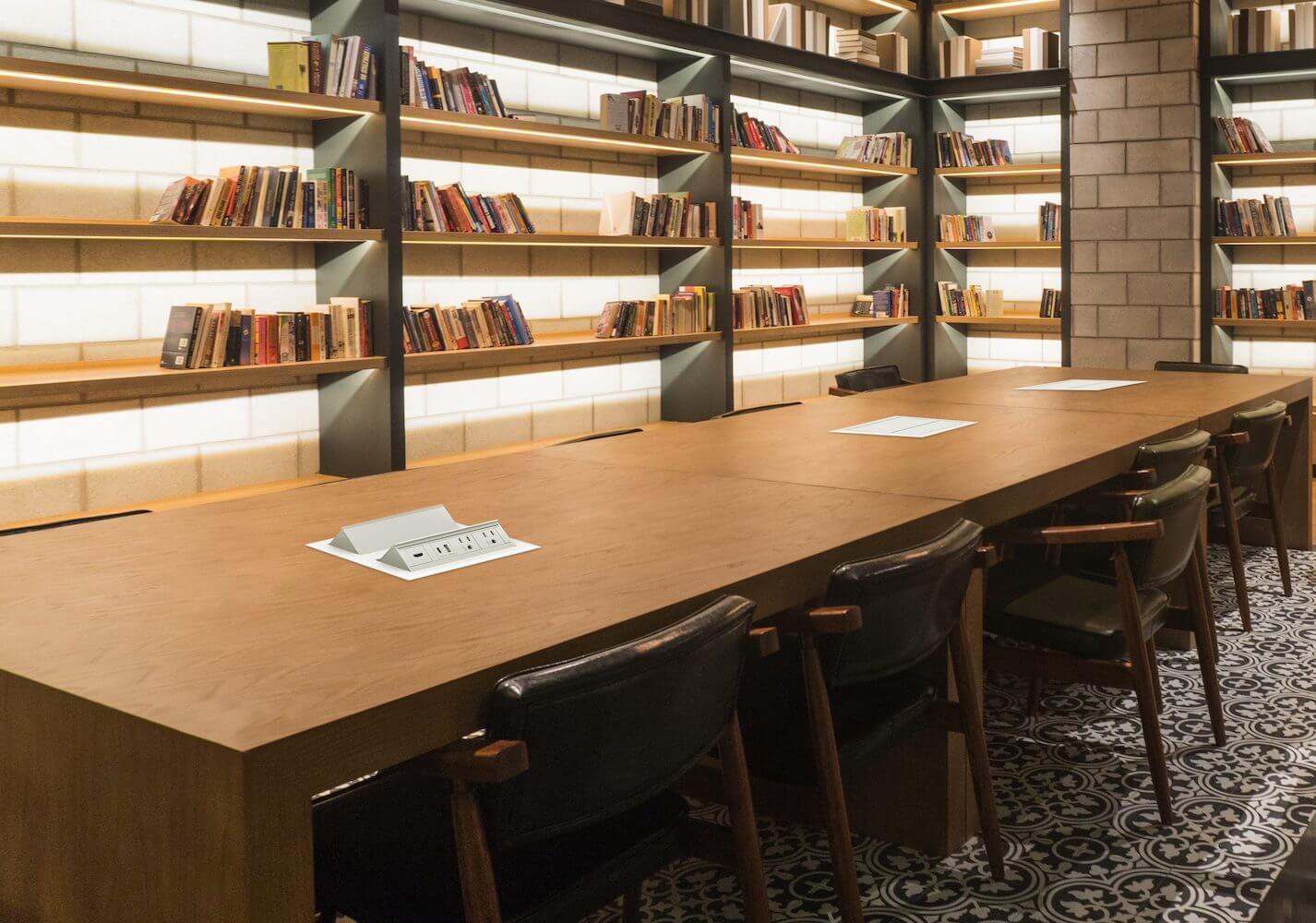
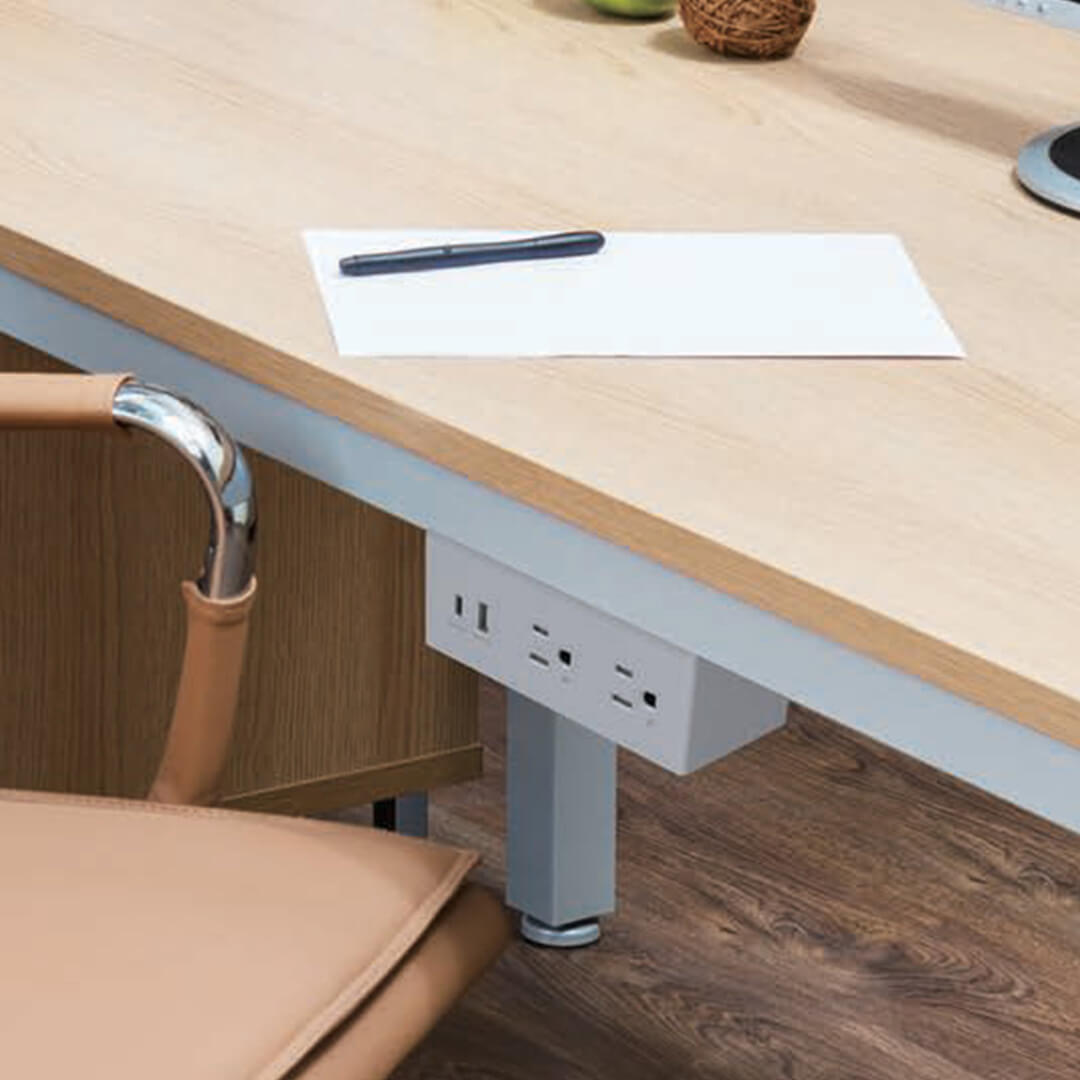
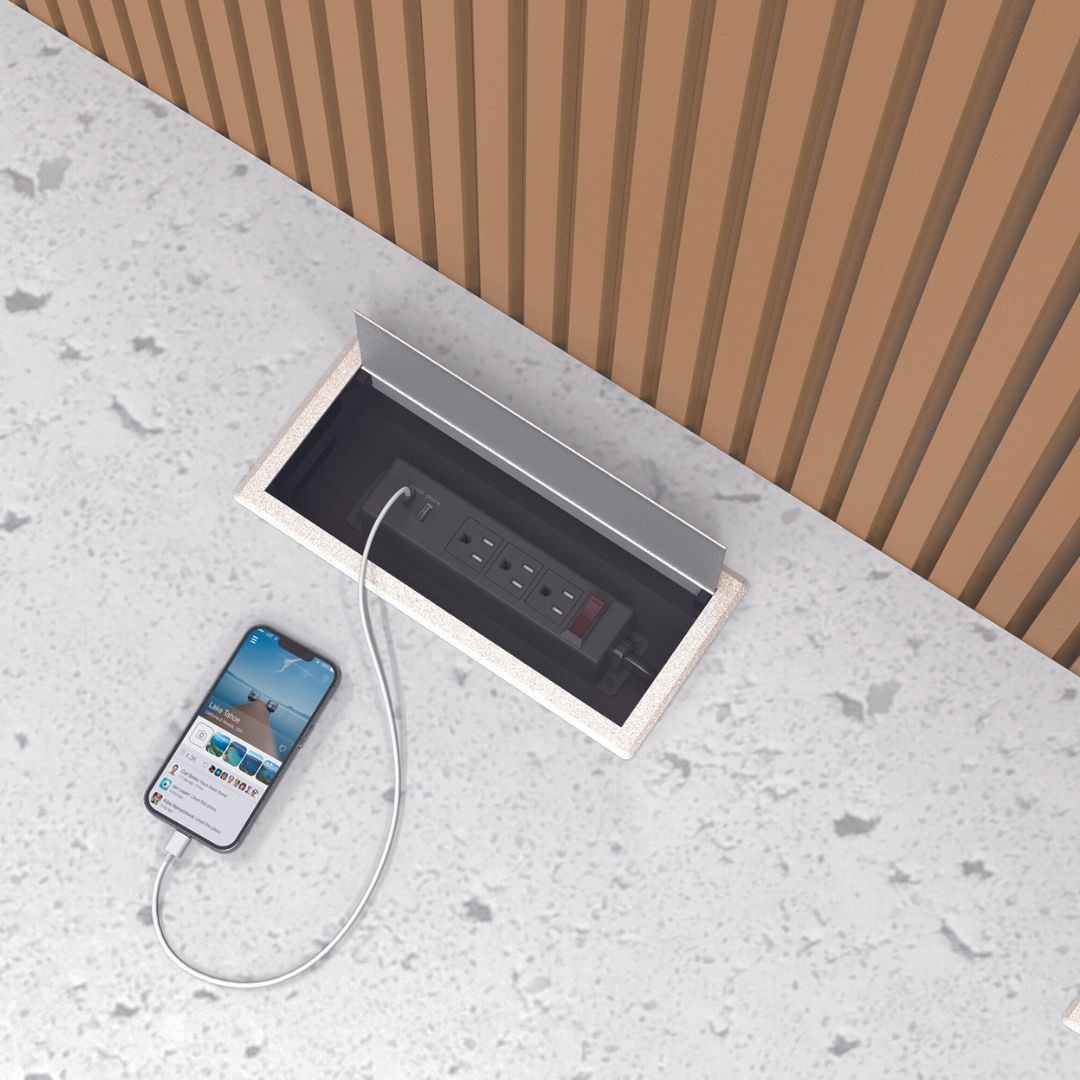
One of the most effective ways to maintain a cohesive design language is to embed power access directly into furniture and architectural millwork. Modular power docks can be recessed into desks, conference tables, banquettes, casework, and built-ins, keeping surfaces functional yet visually uncluttered.
Why designers prefer this approach:
- Maintains uninterrupted material planes
- Eliminates the need for floor boxes or wall penetrations
- Supports flexible furniture layouts in open-plan environments
From co-working spaces to executive boardrooms, furniture-integrated power docks allow architects and interior designers to align power placement with user behavior, rather than forcing users to adapt to static outlets.
-
Use Modular Systems to Support Flexible, Future-Ready Spaces
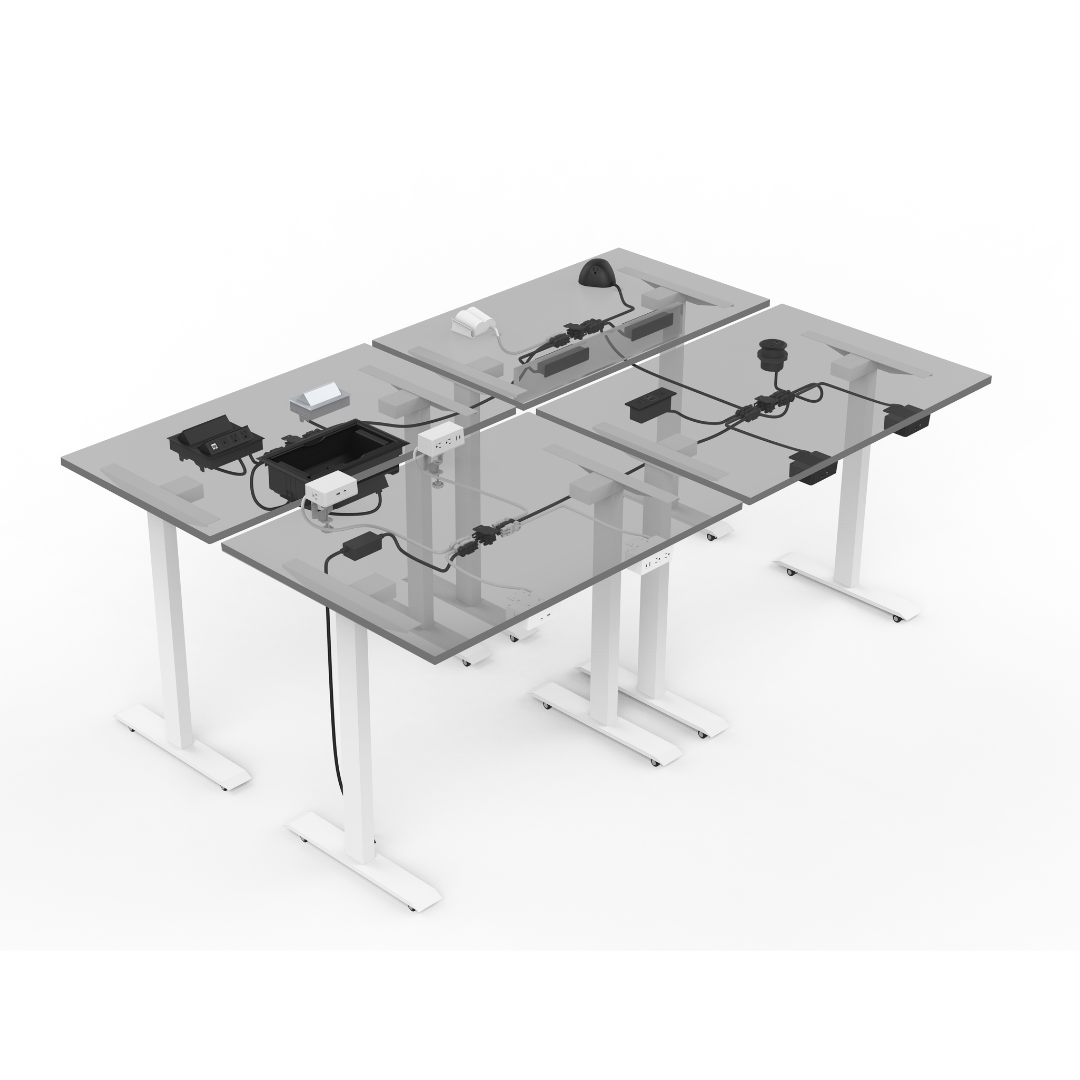
As workplace and hospitality design continues to evolve, flexibility has become a core design principle. Modular power systems are engineered to scale, reconfigure, or expand as spatial needs change, making them ideal for adaptive reuse projects and future-forward design strategies.
Instead of hardwiring fixed outlets that may become obsolete, adaptive power systems allow engineers and facility planners to:
- Add or relocate power without major construction
- Accommodate new technology requirements
- Reduce long-term renovation and maintenance costs
This approach aligns especially well with sustainable design and lifecycle planning, minimizing waste while extending the usability of interior spaces.
-
Choose Low-Profile, Minimalist Power Dock Designs
Aesthetics matter, especially in environments where branding, hospitality, or residential luxury are key drivers. Our modern power docks are available in low-profile, minimalist designs that blend seamlessly into surfaces rather than drawing attention.
Design-forward power solutions now feature:
- Slim form factors
- Flush or near-flush mounting
- Custom finishes that coordinate with wood, metal, and solid surfaces
For architects and designers, this means power access becomes a subtle extension of the design intent rather than a visual distraction.
-
Coordinate Finishes to Match Architectural Materials
One of the most common complaints about traditional outlets is that they interrupt carefully curated material palettes. Modular power docks solve this by offering a range of finish options, allowing power access points to visually integrate with surrounding materials.
Whether specifying for:
- Corporate interiors with branded finishes
- Hospitality spaces with layered textures
- Residential projects with custom cabinetry
Designers can select power docks that complement or discreetly contrast with the environment. This level of customization supports holistic interior design while still meeting electrical and accessibility requirements.
-
Improve User Experience Without Visual Clutter
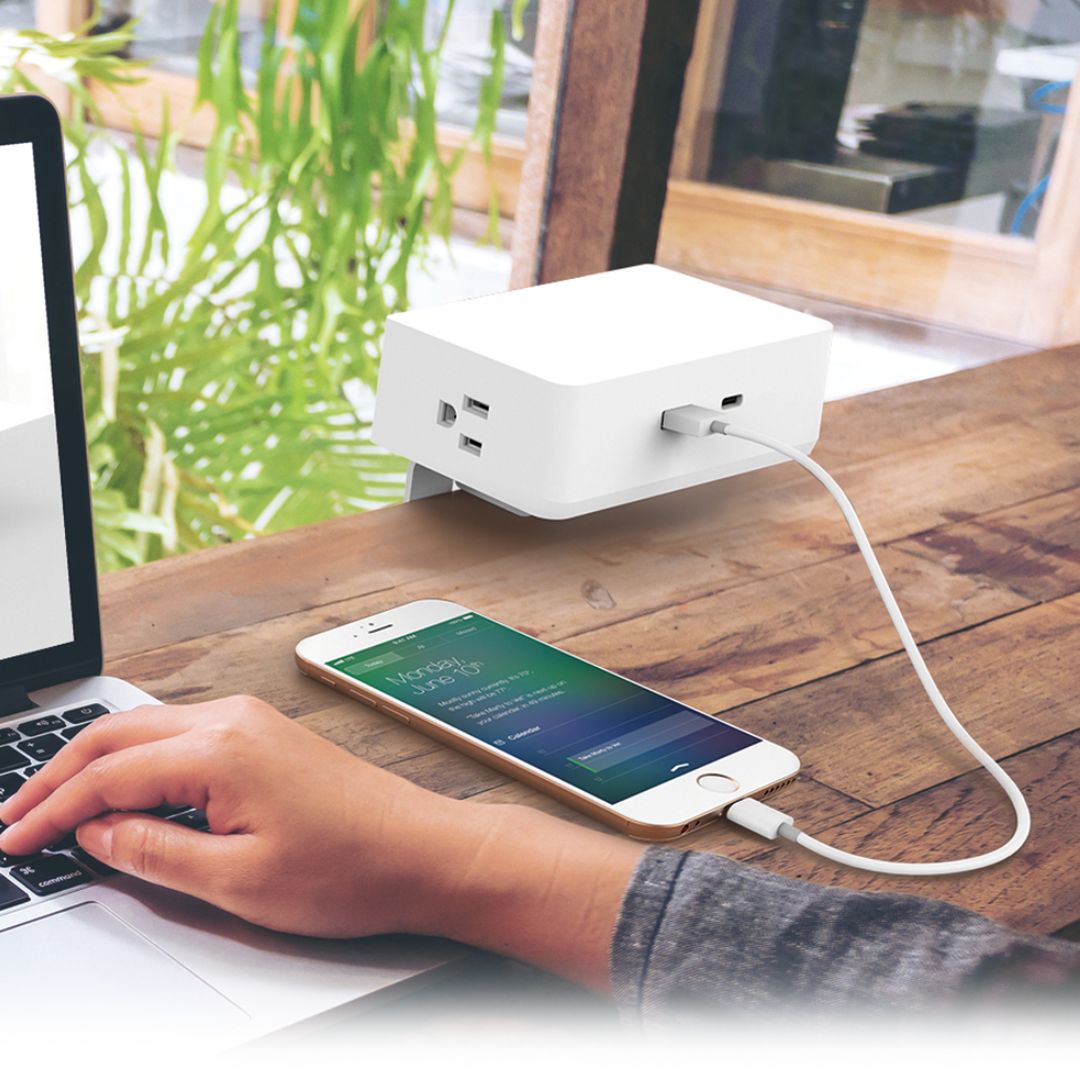
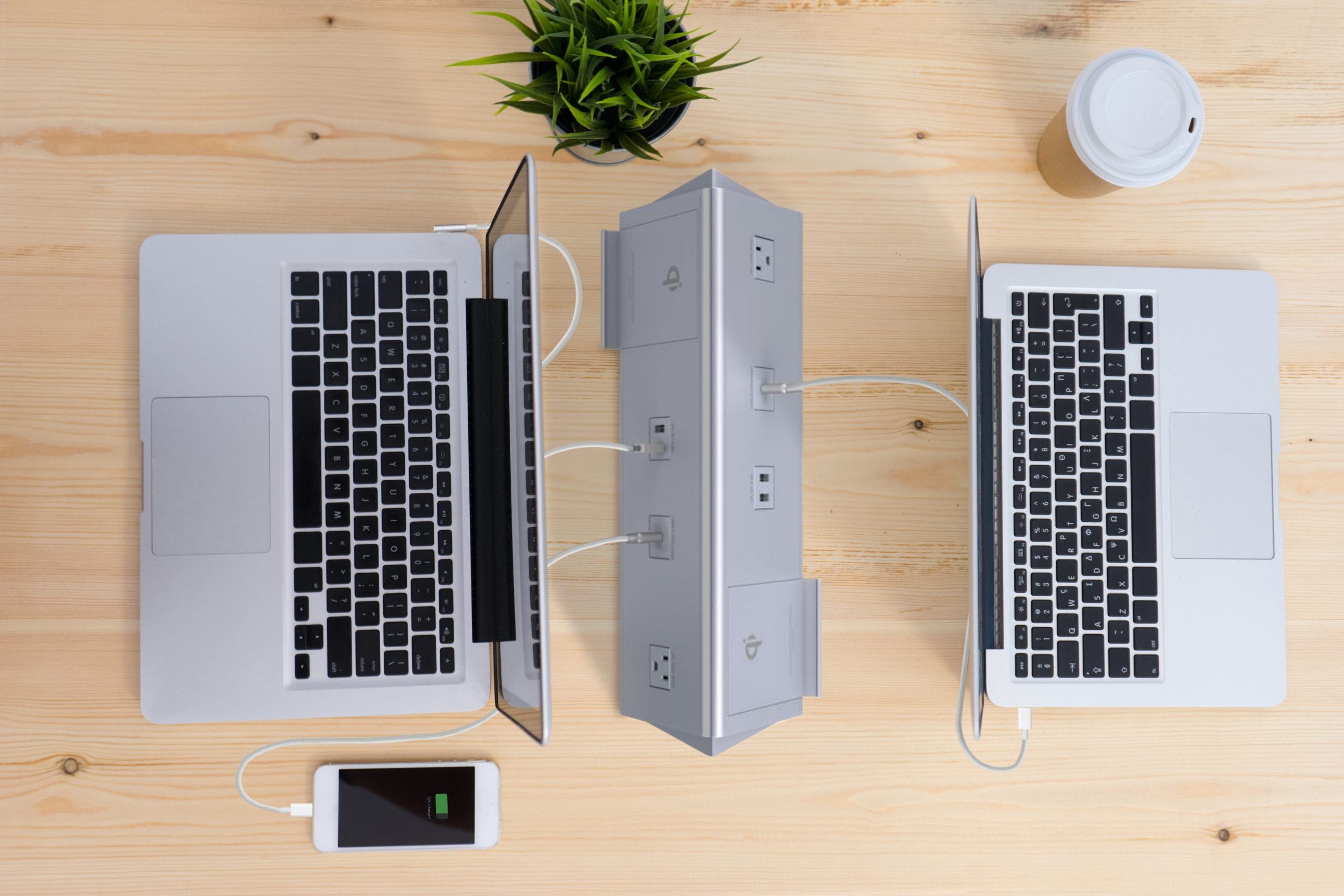
At the end of the day, power access is about usability. Modular power docks are designed to be intuitive and accessible, often incorporating USB charging, data ports, and AC power in a single, compact unit.
By consolidating multiple power needs into one streamlined solution, design teams can:
- Reduce the number of visible outlets
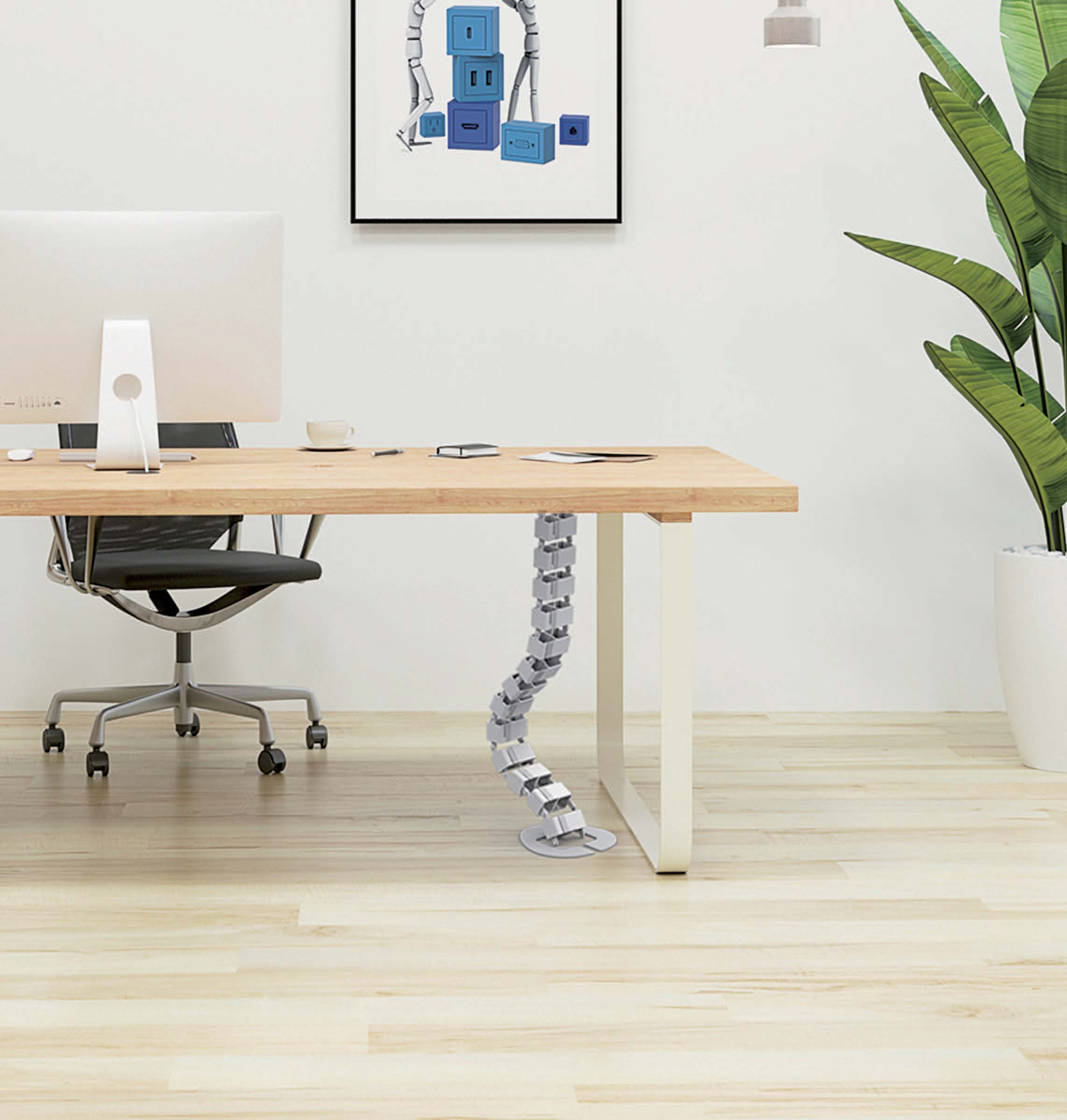
- Eliminate unsightly extension cords
- Enhance user comfort and productivity
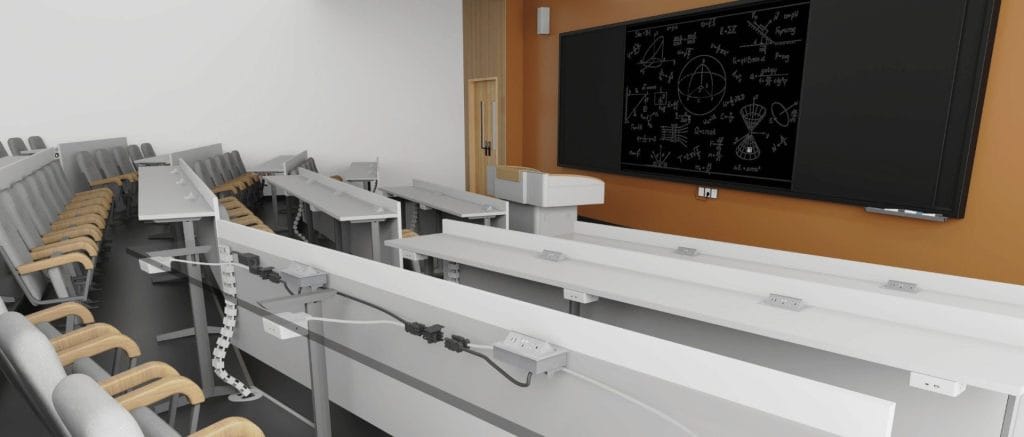
This is especially valuable in high-traffic environments such as offices, education facilities, and hospitality spaces, where user experience and aesthetics must coexist.
Designing Smarter Power Access
Power no longer needs to be an afterthought, or an eyesore. With modular power docks and daisy chain systems, architects, engineers, and designers can deliver solutions that are functional, flexible, and visually refined.
By integrating power into furniture, embracing modularity, selecting minimalist designs, coordinating finishes, and prioritizing user experience, design teams can meet modern power demands without compromising their creative vision.
Smart power access is not just about electricity, it’s about designing spaces that work beautifully, now and in the future.