

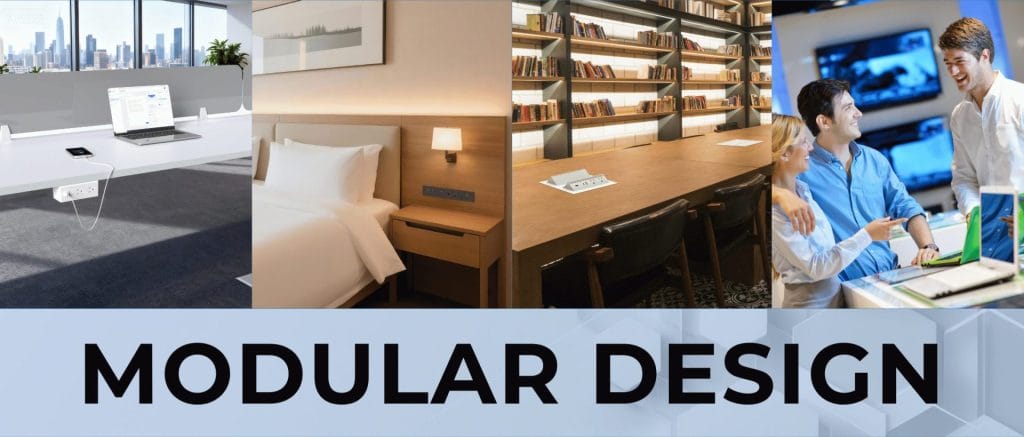
Modern architectural and interior design planning varies by market, but the need for flexible, efficient, and future-ready power infrastructure is universal. Modular power solutions support commercial build-outs across office, healthcare, hospitality, education, and retail environments by simplifying installation, improving coordination, and enabling long-term adaptability.
Below, we explore how modular electrical systems support planning and execution in each major commercial sector.
Modular Power for Office Design and Workplace Planning
Today’s office environments are constantly evolving. Hybrid work, hoteling, and agile team structures require spaces that can adapt without major renovations.
Modular power systems for offices support:
- Future furniture reconfigurations
- Hybrid and flexible workspaces
- Open-plan offices and benching systems
- Technology-dense collaboration spaces
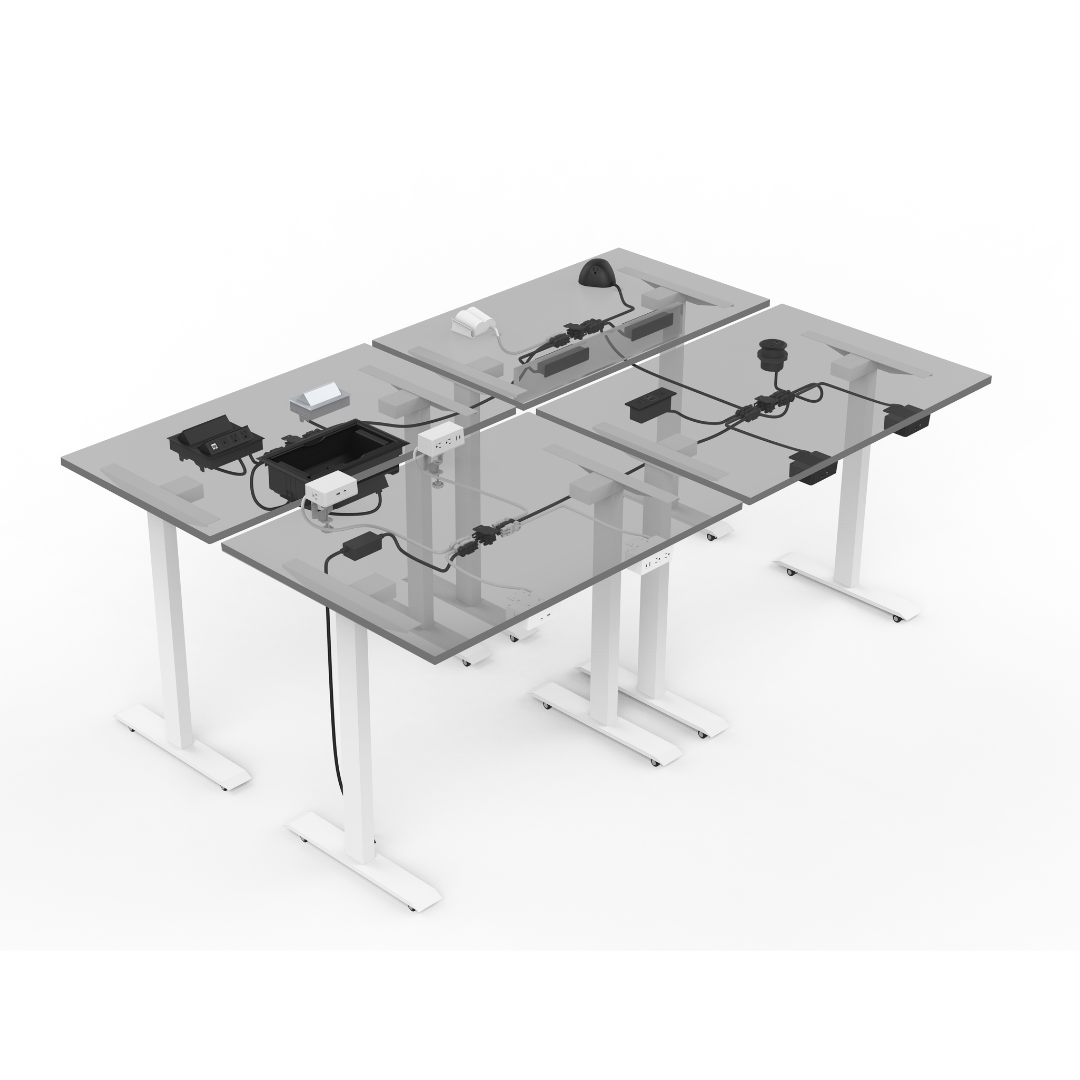
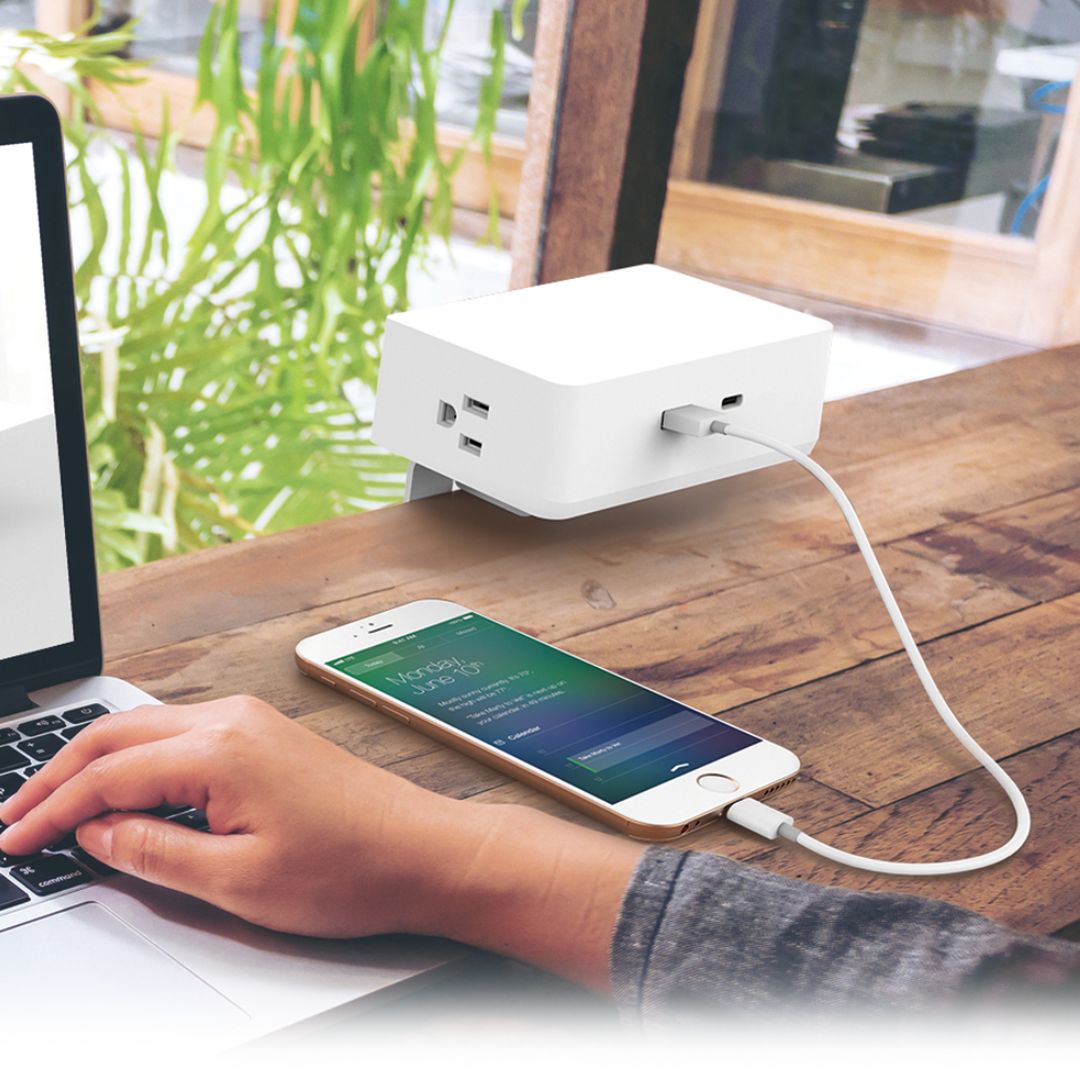
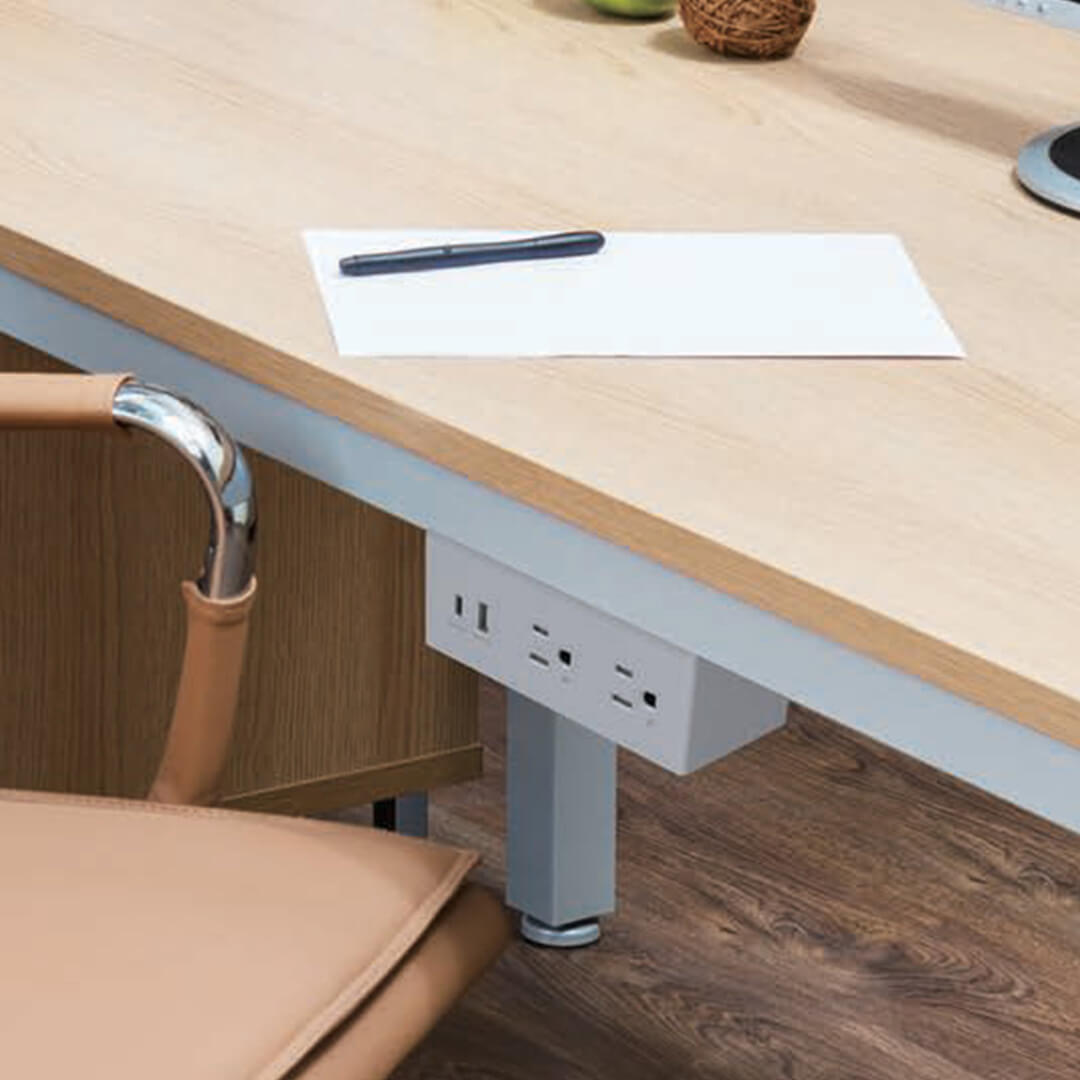
Because modular power integrates directly with modular office furniture, architects and designers can plan layouts that can evolve over time, without redesigning the electrical infrastructure or putting more strain on building management.
🧩 Office Planning
Modular power allows electrical infrastructure to move with furniture layouts, supporting hybrid work strategies without electrical rework.
Modular Power Solutions for Hospitality Design
Hotels, resorts, and mixed-use hospitality environments require power systems that balance aesthetics, guest experience, and operational efficiency.
Modular power in hospitality design supports:
- Back-of-house efficiency
- Faster brand refresh cycles
- Guestroom standardization
- Scalable power for amenities and technology
Because modular systems reduce installation time and simplify future updates, they help hospitality projects stay on schedule while maintaining design consistency across properties.
🏨 Hospitality Design
Modular power supports faster build-outs and renovations, critical for minimizing room downtime and lost revenue.
Modular Power for Education and Learning Environments
Educational spaces must support changing pedagogies, technology integration, and long-term campus planning.
Modular power for education design is ideal for:
- Campus-wide renovation projects
- Higher education classrooms and labs
- K–12 flexible learning spaces
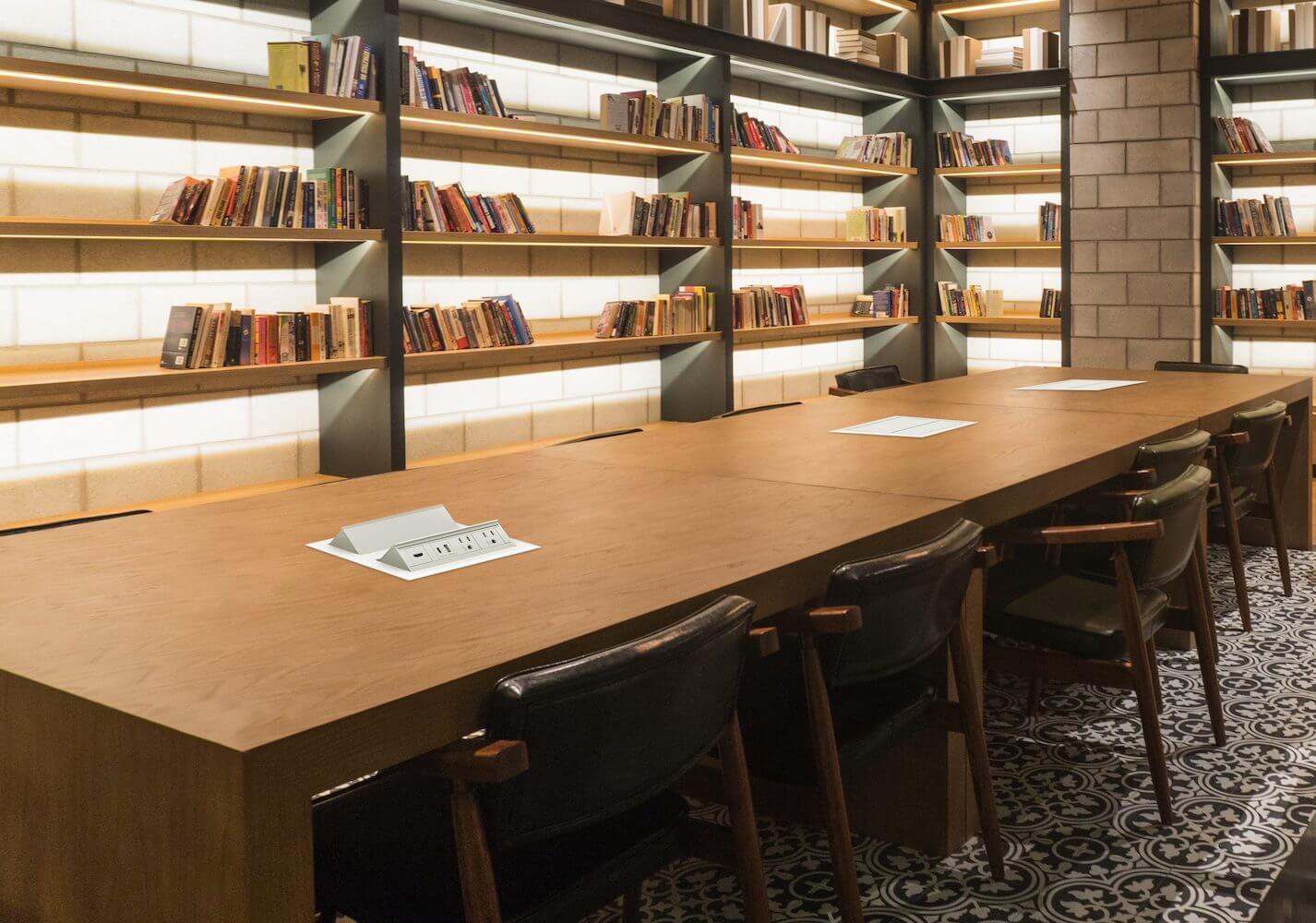
- Libraries and collaborative study areas
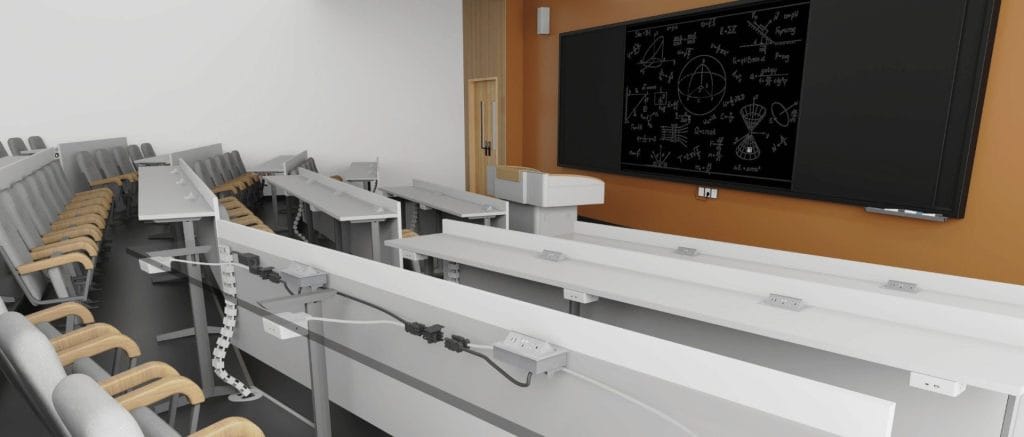
Modular electrical systems allow power to shift as classrooms are reconfigured, supporting active learning environments without recurring electrical costs.
🎓 Education Planning
Modular power enables classrooms to evolve with teaching methods, without rebuilding electrical systems.
Modular Power in Retail Design and Commercial Interiors
Retail environments must adapt quickly to seasonal displays, new technologies, and evolving customer experiences.
Modular power for retail design supports:
- Digital signage and interactive displays
- Flexible floor plans
- Pop-up installations
- Rapid tenant improvements
For retail architects and designers, modular power reduces downtime between build-outs and enables stores to refresh layouts without major construction.
🛍️ Retail Design
Modular power allows retailers to reconfigure spaces quickly, supporting faster merchandising changes.
Cross-Market Benefits Architects and Designers Care About
Across all commercial sectors, modular power systems deliver consistent planning advantages:
- Easier coordination with furniture and technology
- Faster construction schedules
- Future-ready electrical infrastructure
- Improved sustainability and material reuse
- Reduced long-term renovation costs
By standardizing power distribution while enabling flexibility, modular power aligns with how architects and designers plan modern commercial environments.
Final Takeaway: One Power Strategy, Multiple Markets
Modular power is not a one-size-fits-all solution, it’s a flexible electrical strategy that adapts across industries. For architects and designers planning commercial spaces, it simplifies coordination, supports evolving layouts, and delivers long-term value for clients.
As design demands grow more complex, modular power provides the clarity, speed, and adaptability modern projects require.